

Green Tunisia
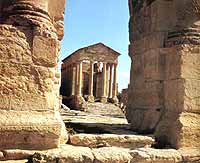
When people talk about the Coral Coast and Bizerta the first thing that comes to mind is the three hundred km coastline with its backdrop of green hills. We are in the north of Tunisia, the green part of Tunisia, and far from the desert region. We are surrounded by oueds and lakes in the land of the cypress and rich harvests. Two thousand years ago, this was the "bread basket" of Rome, and our region has some beautiful examples of ancient Roman towns.
Dougga, Bulla Regia, Chemtou and Utica have all become famous the world over. You will enjoy your vacation by the sea even more when it is supplemented by short trips to these marvelous ruins.
During the 16th, 17th and 18th centuries, the Italian, Spanish and French Republics were all very interested in the region, and by the rich harvests of coral which came from the reefs offshore. The towns here became important ports during the period when trade relations were not always peaceful.
The
large
fortresses
in
Bizerta
and
Tabarka
were
another
result
of
these
turbulent
times.
Today
you
will
find
a
more
peaceful
kind
of
competition
going
on
between
the
popular
resorts
along
the
coast.
Bizerta
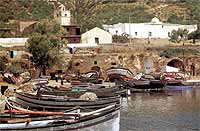
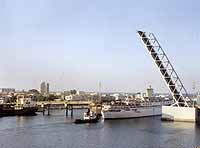
Few cities have a strategic a position as the town the Romans called Hyppo Diarrhytus. It is located on a strip of land that connects the Mediterranean and the huge, natural harbor named after the city. The incomparable shelter for ships explains why Bizerta has always been so important, and why it has been Punic, Roman, Byzantine, Arab and Turkish... Today the city is lively and prosperous. The well-preserved Medina, with its mosques, souks, and Moorish houses, offers many pleasant discoveries for the visitor. Its winding streets end at the Old Port, where there are coffees and small docks for fishing boats, and the atmosphere here is unique. A visit to the fish market is a must.
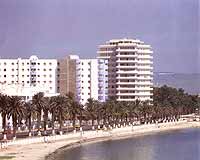
The modern city is full of gardens and wide avenues; Bizerta continues to the north along the famous Corniche, which now has tourist accommodations with well-equipped and comfortable hotels, and to the south lies the beach of El-Rimel, where the white sand has a backdrop of stately pines. Strolling along the streets and tiny alley-ways, the tourist will discover the many kinds of handicrafts available, the result of years of experience: embroidery, rug-weaving, wrought iron, etc.
Tabarka, Aïn Draham: The Sea and the Mountain
The combination of sea and mountains is certainly one of the most sought-after by vacationers, and the area to the northwest of Bizerta offers both with many variations on the theme.
The hills have all different kinds of plant life, and so each mountain is unique.
In
Tabarka,
for
example,
the
hills
are
covered
by
a
dense
forest,
and
the
predominant
tree
is
the
oak,
large
and
majestic.
This
forest
and
the
moor
which
extends
towards
the
Mogods
are
a
hunter's
paradise.
In
this
forest
couches
the
hare:
wild
game
(jackal,
fox,
wild-cat
and
genet)
abound
on
the
fern-covered
trails.
In
his
wonderful
natural
environment
right
in
the
heart
of
the
Khrounira
Forest
at
800m
altitude,
is
found
the
village
of
Ain
Draham
(Source
of
Silver),
especially
appreciated
by
visitors
for
the
quality
of
its
plant
life
and
its
freshness,
as
well
as
for
its
remarkable
range
of
fine
quality
hotel
accommodation.
Where
a
magnificent
forest
and
the
Mediterranean
of
your
dreams
meet
-
that's
where
you'll
find
Tabarka,
a
township
famous
since
ancient
times
for
its
coral
fishing,
a
true
paradise
for
lovers
of
the
sea,
leisure
seekers,
and
diving
enthusiasts,
as
well
as
for
golfers
and
hunters,
on
foot
or
on
horseback,
along
the
paths
and
glades
of
the
superb
woodlands.
Tabarka
is
a
model
of
the
modern
town
for
the
tourist,
too,
with
all
the
facilities
to
make
even
the
most
demanding
holidaymaker
completely
happy;
true
quality
hotels,
true
quality
accommodation,
and
true
quality
cuisine.
And
there's
more.
In
summer,
the
Tabarka
Jazz
Festival
makes
the
town
the
center
of
attraction,
with
its
unique
atmosphere
of
fun
and
relaxation.
Tabarka, with its charming little marina, its luxuriant golf courses, and an international airport within two hours flying time from most European capitals, is your gateway to harmony, nature, comfort and true quality leisure.
Villages and Traditions
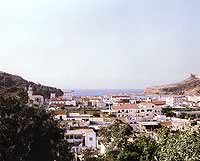
The countryside near the Coral Coast abounds with little villages which are equally tempting for the traveller, because of their customs and traditions as well as their location. Most of them became prosperous after the important Andalousian immigration that occured during the 16th and 17th centuries. Built on a narrow strip of land between mountain and sea, Ghar El Melh (Porto Farina), is a charming fishing port.
Raf Raf is well-known for the rich beauty of its traditional costumes for women, and has a magnificent view overlooking the Gulf. The area also produces some of the best grapes in Tunisia.
Ras Jebel is a large village surrounded by orchards, and boasts an unusual number of attractive minarets. It also has the most important market in the area, and therefore is an especially lively place on Fridays. The tourist will find many other interesting places in the quiet countryside; Metline and Sounine on the coast, Aousdja, Zouaouine and El Alia, where the famous thistles are grown for the felting of chechias in Tunis, Kalaat El Andalous, and so on ... Sixty kilometers to the west of Bizerta, there is a particularly interesting Berber village which produces a very original kind of pottery: Sejnane.

EGYPT - SYRIA - JORDAN