

The
roads
leading
to
Bint
Jbeil
are:
the
sidon-Tyre-Cana-Bint
Jbeil
road;
the
Sidon-
Tyre-Naqura-Rmaysh-Ayn
Ibl-Bint
Jbeil
road;
or
the
Marjeyun-Mays
al
Jabal-Aytarun-Bint
Jbeil
road.
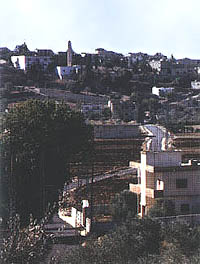
Bint
Jbayl,
the
chief
town
of
the
Caza,
is
located
on
a
hill
overlooking
the
valley
of
Rmaysh,
near
the
southern
Lebanese
border.
Under
the
rule
of
the
al
Saghir
family,
it
was
the
center
of
the
whole
area.
From
this
period,
remains
of
an
old
serail
and
of
a
19th
century
mosque
survive.
One
of
the
main
features
of
this
locality
is
its
weekly
market
held
each
Thursday
and
visited
by
traders
from
the
region.
Leave
Bint
Jbeil
and
continue
to
the
north-west
in
the
direction
of
Tibnin.
After
six
kilometers,
you
come
to
the
village
of
Tiri
where
you
can
visit
the
caves,
the
stone
water
cistern
and
a
rock-hewn
seat
known
by
the
locals
as
the
“king’s
throne.”

Tibnin
Castle
Continue
to
Baraashit,
which
lies
in
the
midst
of
tobacco
plantations
and
where
you
can
visit
caves
and
wells.
The
site
known
as
al
Hara
hides
under
its
ruins
a
very
important
ancient
settlement.
Continue
to
the
north-east,
across
the
tobacco
plantations
to
the
village
of
Shaqra
(11
km),
famous
for
its
modern
mansions
and
buildings.
In
the
old
South
Lebanon,
the
visitor
can
see
rock-cut
tombs
from
different
historical
periods.
Next
to
the
village,
on
a
hill
overlooking
the
whole
area,
stands
a
small
fort
known
as
the
fort
of
Dubiyye,
a
distorted
form
of
the
French
name
“Dubois.”
Crusader
building
erected
on
the
remains
of
a
Roman
temple,
as
attested
by
the
large
stone
blocks
and
the
rock-cut
tombs
next
to
it.
A
rectangular
monument
with
three
floors,
its
southern
part
and
its
upper
third
floor
have
been
totally
destroyed
by
continuous
Israeli
bombardments.
The
remaining
first
and
second
floors
consist
of
some
thirty
rooms
with
several
wells.
Leave
Shaqra
and
go
west
to
the
villages
of
Safad
al
Battikh,
al
Jumayjme
and
Ayn
al
Mizrab.
Turn
right
to
go
to
the
villages
of
Sultaniye
and
Dayr
Antar
(17
km).
In
the
latter,
several
archeological
finds
have
been
discovered.
Many
old
cisterns
hewn
in
the
rock
are
still
in
use
to
this
day
High
up
on
the
village
summit
lies
a
rocky
platform
known
among
the
locals
as
the
“Crypt
of
the
Prophet.”
On
it
are
printed
the
feet,
the
hands
an
These
have
been
interpreted
as
the
traces
left
by
a
person
in
an
attitude
of
prayer.
The
inhabitants
of
the
village
built
a
mosque
next
to
the
platform,
which
has
become
a
holy
place
sought
by
people
for
blessing.
South-west
of
the
village
is
a
famous
natural
grotto
known
as
Mgharet
al
Bzez.
Similar
to
the
Jeita
Grotto,
the
visitor
can
walk
inside
a
long
distance
to
admire
its
stalactites.
(BEIRUT - BYBLOS - JEITA GROTTO - TRIPOLI - SIDON - ZAHLÉ)
(AANJAR - THE CEDARS - TYRE - BAALBECK)

EGYPT - SYRIA - JORDAN