

An Ancient Capital in the Beqaa
Travelers
in
Lebanon
often
notice
curious
flat-topped
hills
or
tells
scattered
around
the
country.
These
are
artificial
mounds
that
slowly
grew
up
over
thousands
of
years
as
different
peoples
constructed
their
settlements
in
the
same
place.
Until
20
years
ago
such
a
tell
existed
just
north
of
Kamid
el-Loz
village
in
the
southeastern
Beqaa.
One
of
the
largest
and
highest
tells
in
the
Beqaa,
it
was
excavated
and
studied
by
German
archaeologists
between
the
mid-1950s
and
the
early
1980s.
The
tell
at
Kamid
al-Loz
turned
out
to
be
of
great
importance,
because
buried
at
this
one
site
were
occupation
levels
that
began
7,000
years
ago
with
Neolithic
or
Stone
Age
people
and
continued
through
the
Persian
Period
in
the
4th
century
BC.
Unfortunately
this
archaeological
work
was
interrupted
during
the
war
in
Lebanon
and
later
the
site
was
completely
ruined
by
treasure
hunters.
Nonetheless,
archeologists
found
and
recorded
many
spectacular
buildings
which
are
very
important
to
the
history
of
the
region.
Numerous
urban
structures
such
as
defense
systems,
temples,
palaces,
private
dwellings,
workshops
and
cemeteries
were
uncovered.
Archaeologists
also
found
everyday
objects
such
as
pottery,
as
well
as
jewelry
and
other
luxury
items.
Probably
the
most
important
finds
were
documents
written
on
clay
tablets.
This
writing
helped
identify
the
tell
of
Kamid
as
the
location
of
"Kumidi",
a
city
named
in
the
Amarna
letters
written
in
the
14th
century
B.C.
Kumidi
was
apparently
an
important
city
and
the
capital
of
Egyptian
colony
that
has
settled
in
the
area
at
least
3,400
years
ago.
By
the
time
of
the
Persian
period
in
the
4th
century
BC,
the
site
of
Kumidi
seems
to
have
become
less
desirable.
And
although
historians
are
not
sure
why,
the
people
living
there
decided
to
move
a
little
further
south
to
the
place
where
the
modern
village
now
stands.
So
it
is
likely
that
today
the
village
of
Kamid
el-Loz
lies
on
top
of
settlements
built
in
the
Persian,
Hellenistic
and
Roman
periods.
South
of
the
village
we
find
a
necropolis
or
burial
place
that
also
dates
to
this
era.
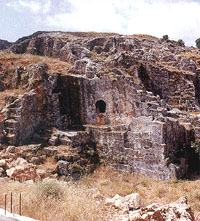
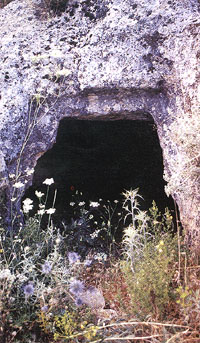
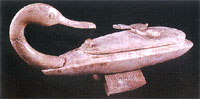
The treasures the archaeologists found in Kamid-Kumindi were kept safe in Germany during the war and are now back in the custody of the National Museum of Beirut. In the meantime German archaeologists have once again begun excavations on the tell of Kamid el-Loz starting in July 1997.
(BEIRUT - BYBLOS - JEITA GROTTO - TRIPOLI - SIDON - ZAHLÉ)
(AANJAR - THE CEDARS - TYRE - BAALBECK)

EGYPT - SYRIA - JORDAN